
Quick Summary
- Northern Virginia has the highest concentration of data centers in the world, according to Axios (September 1, 2026).
- A new state electricity tax on data centers took effect July 1, 2026, while the sales tax break for their equipment stayed in place.
- Fairfax County has had its own zoning rules since September 2024, including a 200-foot buffer from residential lots.
- Axios reports home prices in Loudoun, Fairfax and Prince William have held steady in recent years, even as the debate has gotten louder.
In This Post
- A tax that is the first of its kind
- The local rules that matter
- The tax bill argument
- What buyers and sellers are saying
- Questions worth asking before you buy
- FAQ
- Sources and reporting limits
A Tax That Is the First of Its Kind
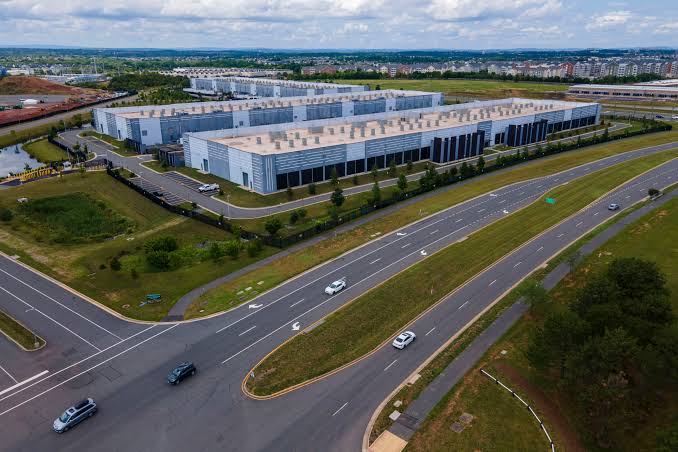
If you drive Route 28 or the Loudoun County Parkway corridor, you already know the windowless buildings. What changed this summer is who pays for them.
On June 29, 2026, Governor Abigail Spanberger signed the state budget, HB 30, according to a client alert from the law firm Whiteford. It created a tax on the electricity data centers use, set at $0.011 per kilowatt hour, effective July 1. The same alert reports revenue of up to $600 million a year, and a sunset date of June 30, 2028 unless lawmakers extend it. It is described as the first tax of its kind on data centers in any state.
It was not the outcome many residents were asking for. The legislature had been deadlocked over whether to end the sales tax exemption on data center equipment. The compromise kept the exemption, which Bloomberg Tax puts at roughly $2 billion, and added the new tax on top. Cardinal News reported that the budget also calls for environmental reviews, noise standards, water scarcity criteria and state data collection on energy and water use. A joint legislative subcommittee is expected to report on data center taxation in November 2026, per Whiteford.
$0.011 per kWh: the new state tax on electricity used by qualifying data centers, effective July 1, 2026, capped at $600 million a year in revenue and set to expire June 30, 2028 unless extended.
The Local Rules That Matter
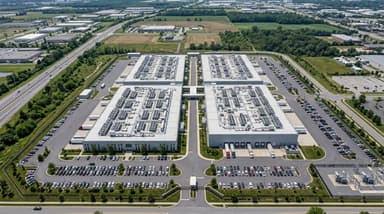
State law is one layer. The other is whatever your county has on the books. Fairfax County’s Board of Supervisors approved updated data center zoning on September 10, 2024. According to the county, buildings must sit at least 200 feet from an adjacent residential lot line, and backup generators and similar equipment need 300 feet. Facilities must be at least one mile from a Metro station, and noise studies are required before and after construction. Larger projects in most zones need a special exception, and the county notes lesser setbacks can be approved through that process.
That matters for anyone shopping in Reston, Oakton or McLean, because those neighborhoods sit inside Fairfax County and fall under those rules. It does not mean a data center will never be proposed near you. It means there is a public process, and you can read it.
Prince William County looks different. A June 2026 WJLA report on a Manassas town hall describes the proposed Digital Gateway as 37 facilities across 2,000 acres, and says the county expects more than $500 million in local taxes from data centers this year.
The Tax Bill Argument
Here is where the conversation gets tangled. Supporters say data centers pay a huge share of local taxes, which keeps residential rates lower. A May 2026 piece from the Chamber of Progress, drawing on a Mangum Economics report prepared for the Northern Virginia Technology Council, estimates that Loudoun’s median homeowner, assuming an $800,000 home, would pay about $12,296 a year instead of about $6,440 without data center revenue. That is a gap of roughly $5,800.
Read that with care. The Chamber of Progress and the Technology Council both have ties to the industry, and the piece itself concedes that a lower tax rate does not guarantee a lower bill year to year, and that depending heavily on one industry carries risk. The number is a useful argument. It is not a neutral audit.
Opponents hear the same facts differently. At the Manassas town hall, one resident said the legislature must “put guardrails on Virginia’s data center gluttony before homeowners, taxpayers, and our children are left with the bill.”
What Buyers and Sellers Are Saying
Axios spoke with local agents in a September 1 story. Chris Colgan said the topic has spread nationally this year: “It was just local to our area, but now it’s all everybody freaking talks about.” Kim Spear said some longtime Loudoun owners are rethinking their lifestyle: “This is not the Loudoun that we first bought into.” The story also says some buyers worry about noise, humming and what a nearby site could do to values, while others still put jobs and good neighborhoods first.
On the numbers, Axios reports prices in Loudoun, Fairfax and Prince William have stayed steady over the last few years. So far, the fear seems to be moving faster than the data.
Questions Worth Asking Before You Buy
Check the county zoning map for industrial land near the address. Look up pending rezoning and special exception applications. Ask about noise, because that is the complaint that comes up most. And if you are weighing neighborhoods, remember the Fairfax buffers above. Our Reston page, McLean page and Ashburn buyer’s guide are good starting points for comparing areas.
FAQ
Did Virginia end the data center sales tax exemption? No. According to Whiteford and Cardinal News, the exemption on data center equipment remains in place. The new electricity tax was added alongside it. Does Fairfax County require a buffer between data centers and homes? Yes. The county’s 2024 amendment requires 200 feet from adjacent residential lot lines for buildings and 300 feet for backup generators, with lesser setbacks possible through special exception. Have data centers pushed home prices down? Axios reports prices in Loudoun, Fairfax and Prince William have been steady in recent years. That is a general trend, not a prediction for any single street. Will the new tax lower my property taxes? The state tax goes to the general fund. Whether it changes your county bill is a separate question the sources reviewed here do not answer.
Sources and Reporting Limits
- Axios Washington D.C., “How data centers are impacting Northern Virginia real estate,” Mimi Montgomery, September 1, 2026.
- Whiteford, Taylor & Preston LLP client alert on Virginia’s data center electricity consumption tax (signing June 29, 2026; effective July 1, 2026; sunset June 30, 2028; November 2026 study).
- Cardinal News, “General Assembly passes a budget, consumption tax for data centers included,” June 22, 2026.
- Bloomberg Tax, “How Data Centers Preserved Their $2 Billion Virginia Tax Break” (headline figure only).
- WJLA, report on the June 15, 2026 Manassas town hall, published June 16, 2026.
- Chamber of Progress, May 14, 2026, citing the 2026 Virginia Data Center Report by Mangum Economics for the Northern Virginia Technology Council (2024 data).
- Fairfax County, news release on the data center zoning amendment (approved September 10, 2024).
- Limits: laws, rates and local rules can change, especially with the November 2026 subcommittee report pending. Industry-affiliated figures are labeled as such. Nothing here is a forecast of home values or a tax or legal opinion.
Curious how data center plans could affect a specific Northern Virginia neighborhood you are considering? Reach out to Nikki and she will help you look at the map before you fall in love with a house.